
How Do Solar Panels Work In Alberta Commercial Buildings?
Article Overview
Understanding how solar panels work is the first step for commercial property managers evaluating renewable energy investments. This article explains how solar panels convert sunlight into usable electricity in Alberta commercial buildings, from rooftop arrays to grid integration. It provides a technically accurate overview of system components, electrical conversion, and utility interaction so decision-makers can assess solar opportunities with clarity and confidence.
What Happens When Sunlight Hits A Commercial Solar Panel?
To understand how solar panels work in commercial buildings, it helps to start at the photovoltaic cell level. A commercial solar panel contains multiple silicon-based photovoltaic cells wired together within a durable frame. These cells are designed to convert sunlight into electrical energy through the photovoltaic effect.
When sunlight strikes the surface of a panel, photons transfer energy to electrons within the silicon material. This energy excites the electrons and allows them to move, creating an electrical current. The electricity produced at this stage is direct current power.
For a more detailed breakdown of what a solar panel is and how solar energy is produced step by step, including photovoltaic cell construction and inverter function, see our complete technical guide on What Is A Solar Panel And How Is Solar Energy Produced Step By Step?
In Alberta’s climate, solar panels often perform efficiently due to cooler temperatures, as lower ambient heat can improve photovoltaic efficiency compared to very hot climates. Snow management and system tilt angles are key design considerations to maintain year-round production.
How Does A Solar Panel Work Within A Commercial System?
Understanding how a solar panel works individually is only part of the equation. In commercial buildings, panels operate as part of a larger interconnected system.
Individual panels are connected in strings, and multiple strings are combined to form a commercial array. The scale of the system depends on roof size, structural capacity, electrical service limits, and the building’s energy consumption profile.
The direct current electricity generated by the panels flows through wiring to inverters. From there, it is converted into alternating current electricity that matches the building’s electrical infrastructure and Alberta utility standards. The electricity can then be used immediately on site or exported to the grid under approved interconnection agreements.
Commercial systems are engineered to ensure voltage stability, load balancing, and compliance with Alberta Electrical Code requirements. Proper system design ensures safe and predictable operation across decades of service.
How Solar Panels Work With Inverters And Electrical Infrastructure
A common variation of the question is how solar panels work once electricity leaves the solar array and enters the building’s electrical system. The answer lies in the inverter and electrical integration.
Solar panels generate direct current electricity. However, commercial buildings operate on alternating current. The inverter performs the critical task of converting direct current into alternating current while synchronizing with the utility grid.
In commercial installations, inverters are selected based on system size, redundancy requirements, and monitoring capabilities. Larger buildings may use centralized string inverters or distributed inverter configurations depending on roof layout and shading conditions.
Beyond conversion, the inverter manages safety functions. These include rapid shutdown capability, anti-islanding protection during power outages, and voltage regulation to ensure grid compliance. Without proper inverter selection and configuration, system efficiency and safety can be compromised regardless of panel quality.
How Solar Panels Work With The Alberta Electrical Grid
Commercial property managers often ask how solar panels work when connected to the grid. In Alberta, most commercial systems are grid tied.
When solar production exceeds a building’s real time energy demand, surplus electricity is exported to the grid through a bi-directional meter. When solar production is lower than demand, such as during early morning or winter evenings, the building draws power from the grid as usual.
This grid interaction allows commercial buildings to reduce net electricity consumption while maintaining operational continuity. Utility approval, engineering review, and proper disconnect installation are mandatory before grid connection is authorized.
Grid tied systems are designed to shut down automatically during utility outages for safety reasons. This protects line workers and ensures regulatory compliance.
What Determines How Effectively Solar Energy Is Produced?
While the core process explains how solar panels work, overall system performance depends on several engineering factors. For commercial buildings in Alberta, these include:
● Roof orientation and tilt angle, and overall array layout
● Structural load capacity
● Electrical service size and configuration
● Shading from adjacent structures
● Snow shedding and drainage considerations
Each of these variables influences annual energy output and system longevity. Production estimates are typically calculated using modelling software that accounts for historical solar irradiance data specific to Alberta.
Commercial systems must also account for future maintenance access, equipment clearances, and compliance with fire code pathways. Performance is not determined by panel technology alone but by how the system is designed and integrated into the building.
Why Roofing And Structural Integration Matter In Commercial Installations
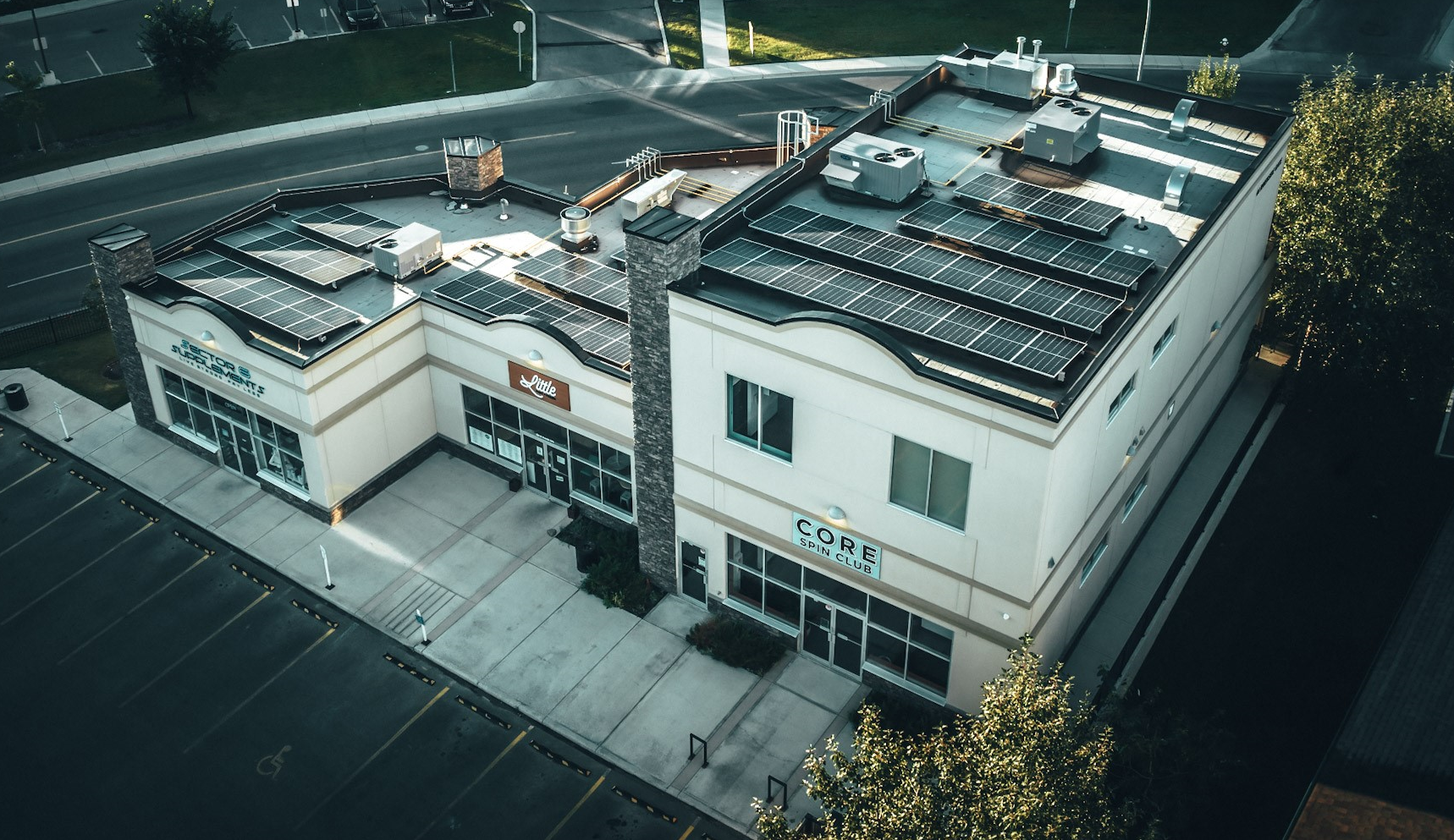
Solar panels in commercial buildings are typically configured into interconnected arrays and mounted on flat or low-slope rooftops using engineered racking systems. These array structures must be anchored securely while preserving the integrity of the building envelope.
Improper mounting can lead to membrane damage, water intrusion, and long term structural issues. For this reason, integrated roofing and solar expertise is critical. Proper flashing, ballast calculations, and structural assessments ensure the building remains protected while supporting the additional load of the solar array.
Electrical integration is equally important. Commercial installations require proper grounding, surge protection, disconnect switches, and coordination with existing distribution panels. All work must comply with Alberta Electrical Code standards and local permitting requirements.
What Alberta Commercial Buildings Should Understand Before Moving Forward
Solar technology is proven and reliable, but outcomes depend on engineering precision and proper integration. Solar panels convert sunlight into electricity through a predictable process, yet overall performance is shaped by design, roofing considerations, electrical compliance, and grid coordination.
When installed correctly, commercial solar systems in Alberta provide stable long term energy production with minimal ongoing maintenance. Understanding how solar panels work allows property managers to evaluate system proposals based on technical merit rather than marketing claims.
Rocky Mountain Solar Co. delivers roof integrated, code compliant commercial solar systems designed specifically for Alberta buildings and grid requirements.
Contact us to request a professional commercial solar assessment tailored to your building’s structure, electrical capacity, and long term energy goals.
Contact Us
"*" indicates required fields